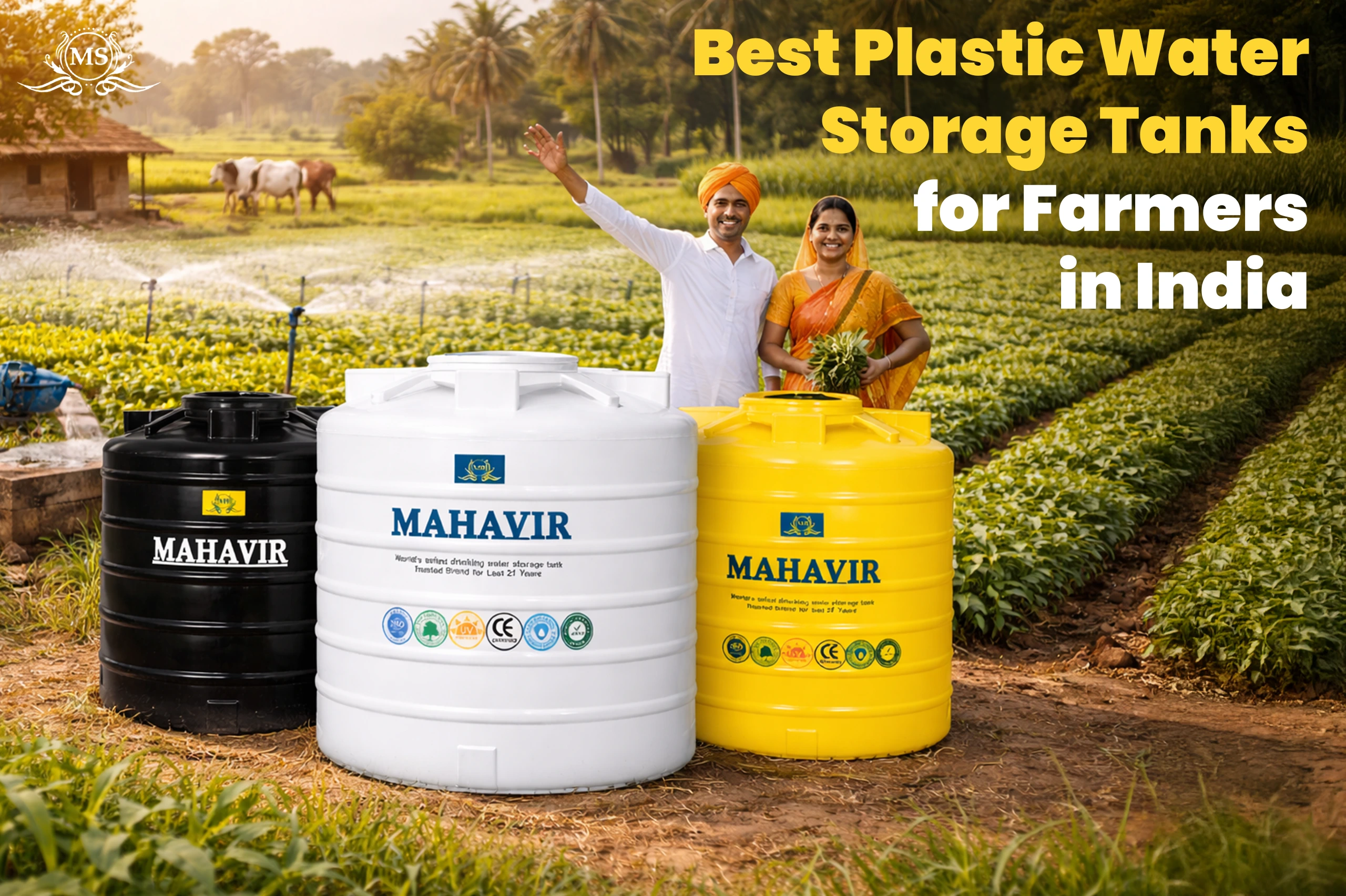
Indian farms face severe operational risks when grid power fails during peak summer temperatures. When a borewell stops lifting at 2 PM, surface soil bakes into a hard crust within an hour. This rapid drying locks out surface fertilizers applied earlier in the day. The resulting downtime causes immediate financial losses while operators wait for the electricity board to restore the connection. Gravity-fed backup systems mitigate this costly downtime. Installing reliable plastic water storage tanks provides immediate head pressure the moment the main line fails. Solar pump setups face a different restriction because they only move water during direct daylight hours. Operators must capture that daytime flow. Investing in large plastic water storage tanks provides the necessary volume to hold water for evening irrigation schedules when soil evaporation is significantly lower.
- Power cuts consistently ruin scheduled drip irrigation cycles.
- Gravity feeds keep crops alive during sudden heat stress events.
- Static holding zones allow heavy borewell sand to settle, saving expensive emitters from choking.
FIELD REALITIES OF LARGE PLASTIC WATER STORAGE TANKS
Table of Contents
ToggleWater volume dictates final agricultural yields. Missing a watering window permanently stunts vegetative growth. Late-season urea applications cannot reverse this specific physiological damage. Commercial farming setups utilize massive holding capacities as their primary operational defense. They rely on the physical weight of the stored water to push through hundreds of meters of lateral lines. Residential overhead units fail in this application because they lack the required downward force. Farm operators often run heavy 10HP pumps hard for a brief two-hour window specifically to fill these reserves. This process secures the evening distribution cycle. You control the timing instead of relying on the local grid.
WHAT PLASTIC WATER STORAGE TANK MANUFACTURERS WON’T DISCUSS
Hardware suppliers frequently push inventory that carries the highest profit margin. Understanding the actual extrusion materials sourced from top plastic water storage tank manufacturers changes the lifespan of an irrigation setup. Polymers react differently when exposed to field conditions.
LLDPE (Linear Low-Density Polyethylene): This remains the standard agricultural material. It flexes under intense heat instead of snapping under pressure.
- Handles extreme open-field UV radiation.
- Requires a carbon black layer to prevent rapid internal algae growth.
- Demands a mandatory ISI food-grade rating if the setup runs directly to cattle troughs.
- Relocation is straightforward if farm layouts shift between seasons.
HDPE (High-Density Polyethylene): Rigid and dense. Farmers purchase this specification for heavy pesticide mixing stations. It handles aggressive chemical loads without warping.
SIZING LARGE PLASTIC WATER STORAGE TANKS
Guessing required volume leaves systems empty mid-cycle. Wind speed and daily evaporation dictate actual capacity needs.
| Farm Size | Baseline Capacity | Main Application |
|---|---|---|
| Under 2 acres | 5,000 Liters | Gravity drip feeding |
| 2 to 5 acres | 10,000 Liters | Polyhouse misting systems |
| 5+ acres | 20,000+ Liters | Centralized distribution hub |
| Dairy setup | 5,000 Liters (per 50 cattle) | Wash down the floors and drinking |
AVOIDING CHEAP PLASTIC WATER STORAGE TANK MANUFACTURERS
Price per liter is an inefficient metric for agricultural equipment. Direct sunlight destroys weak polymers within a single season. Multi-layered walls are now a standard operational requirement. The carbon black layer stops light penetration entirely. Light exposure causes algae. Algae plugs a secondary disk filter in ten minutes. Ribbed outer walls handle mechanical loads. Ten tons of water pushes outward with significant force. Horizontal ribs stop the sides from bulging. Flat walls warp under that specific weight limit. Cheap units rely heavily on recycled polymer mixes. They turn brittle after one summer season. Authentic plastic water storage tank manufacturers utilize virgin LLDPE for the inner lining to maintain water purity. Recycled plastics fail unpredictably in the field.
INSTALLING PLASTIC WATER STORAGE TANKS
Loose soil shifts under heavy loads. Premium large plastic water storage tanks split right at the seams if the base drops an inch on one side. Pour a completely level concrete pad prior to installation.
Install a section of flexible pipe at the main outlet. Glued PVC snaps from direct water pump vibration. Route the overflow pipe far away from the concrete pad. Dumping water right next to the installation washes out the supporting foundation.
UPKEEP FOR PLASTIC WATER STORAGE TANKS
Operators frequently ignore full storage units until a component breaks.
- Secure loose lids against high wind speeds.
- Flush the bottom sludge periodically using the main drain valve since borewell sand builds up continuously.
- Check outlet fittings for stress fractures.
SECURING THE FARM INFRASTRUCTURE
Farm infrastructure requires extreme durability to remain viable. Multi-layered ribbed units handle the intense heat and weight loads common in Indian agriculture. Equipping a farm with solid plastic water storage tanks from Mahavir Group secures crop yields against unpredictable grid failures.
FAQS
Why add an above-ground tank?
- It provides a necessary operational buffer. Standard plastic water storage tanks feed the drip lines directly during random power cuts.
What materials work best in the field?
- LLDPE provides flex for sun exposure. HDPE is rigid and handles aggressive chemical mixing.
Do all plastic water storage tank manufacturers provide UV protection?
- No. Farm operators must specify multi-layer tanks with a carbon black middle layer to stop UV damage and prevent brittleness.
How long do they last?
- Virgin polymer tanks placed on flat concrete generally last 10 to 15 years.
Can they handle massive water pressure?
- Only ribbed designs. The ribs stop the flat walls of large plastic water storage tanks from warping under the heavy internal weight of the water.