Field equipment takes a massive beating. Water storage hardware is no exception. Farm managers depend on these reserves for daily irrigation and livestock hydration, yet many operations still use standard commercial containers. These basic units rarely survive prolonged field exposure. Direct sunlight bakes the plastic. Sharp temperature drops at night stress the material further. Eventually, the plastic becomes brittle and develops microscopic cracks near the base or along the seams. A split container in the middle of a dry season isn’t just an inconvenience. It stops irrigation schedules immediately. It creates rapid livestock emergencies. You lose money the second that water pressure drops. Relying on weak plastics guarantees a costly operational failure.
Why Farm Operations Need a Durable Water Tank
Table of Contents
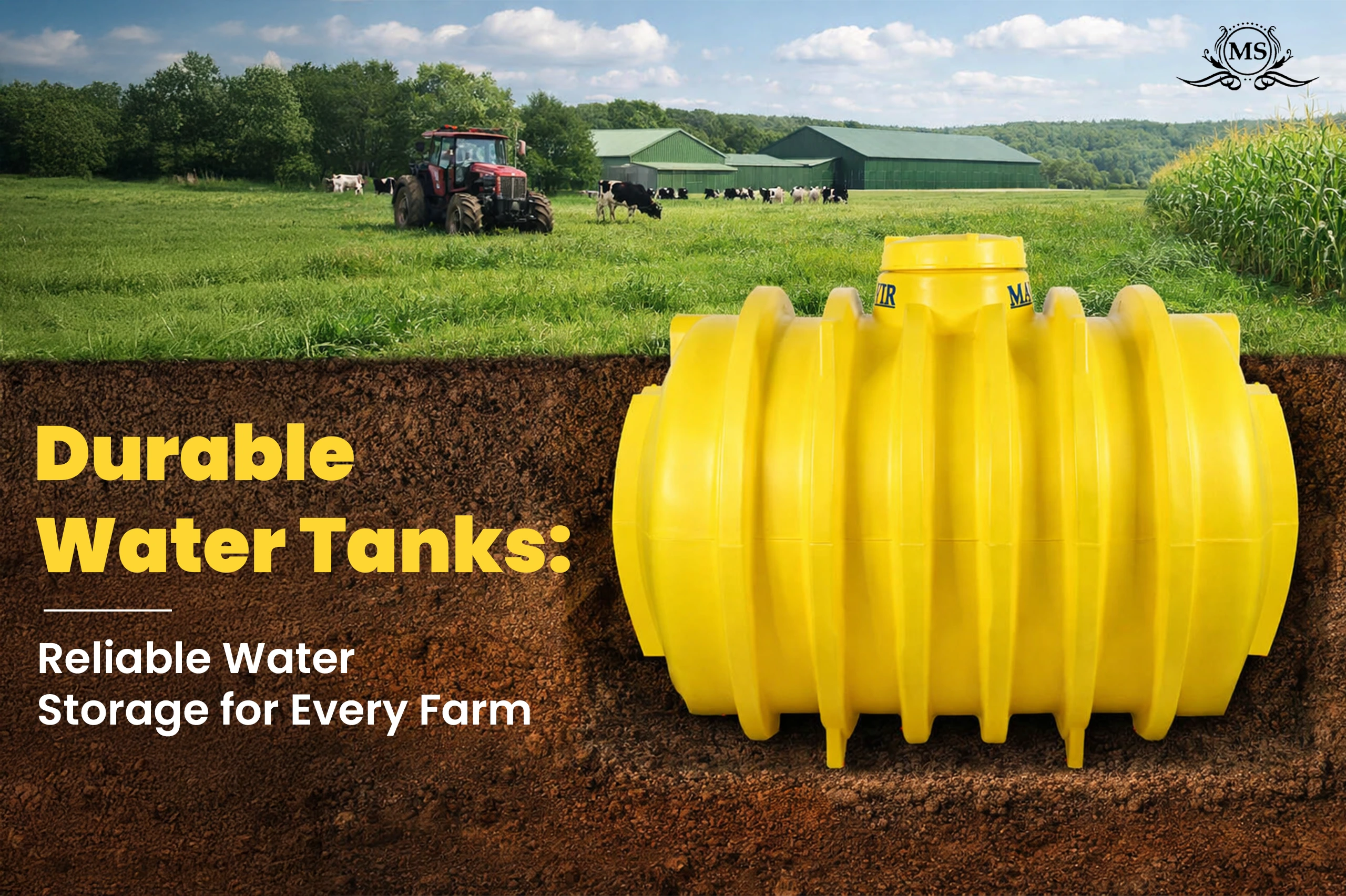
ToggleFarm productivity stops completely when water access fails. Relying on temporary or low-grade containers guarantees operational failure at the worst possible time. A durable water tank withstands the severe physical stress of constant filling and draining cycles. The rapid change in internal pressure strains the walls of poorly manufactured containers.
Agricultural settings also expose these units to blunt force impact. Farm machinery, heavy tools, and large livestock frequently bump into storage units. A weak wall shatters. A properly engineered wall absorbs the impact. Ground stability also plays a role. Farm terrain shifts with heavy rains and dry spells. Rigid, brittle plastics crack under uneven ground pressure. High-density polyethylene flexes slightly. This minor flexibility saves the structure from catastrophic failure when the concrete pad or compacted dirt settles unevenly.
Storage Performance Data
| Feature | Basic Storage Container | Agricultural-Grade Storage |
|---|---|---|
| Material | Single-layer LLDPE | Multi-layer HDPE |
| UV Resistance | Low (Degrades in 2-3 years) | High (UV Stabilized) |
| Wall Thickness | 3mm - 5mm | 7mm - 12mm+ |
| Algae Prevention | Poor | Excellent (Light-blocking layer) |
| Impact Tolerance | Shatters under heavy impact | Absorbs kinetic energy |
Evaluating Durable Water Tank Manufacturers for Agricultural Use
Not all production facilities understand the brutal realities of agricultural demands. Many standard producers focus entirely on residential markets. Residential conditions remain relatively controlled. Farm environments demand specific material compositions that survive extreme weather and rough handling. High-density polyethylene (HDPE) provides the necessary resistance to environmental stress cracking. It handles the continuous expansion and contraction caused by the sun’s thermal load without losing its molecular bond strength. This thermal stability prevents the sudden mid-season ruptures that plague cheaper alternatives.
You must evaluate the baseline production standards. Rotational molding creates a seamless structure. Seams are inherent weak points. Leaks originate at seams when the unit reaches maximum holding capacity. Two-piece constructions eventually split at the middle joint under the outward pressure of thousands of liters of water.
Key Features of a Premium Durable Water Tank
Field performance depends on specific engineering choices rather than basic volume capacity metrics. Farm managers need to look past the label.
- Multi-layer construction: Blocks sunlight penetration entirely. Algae growth inside the water supply blocks irrigation filters. It also harms sensitive livestock digestive systems.
- UV stabilization: Prevents the plastic polymer from breaking down and becoming brittle after prolonged outdoor exposure.
- Reinforced ribbing: Distributes the outward pressure of stored water evenly across the entire vertical structure.
- Food-grade internal layers: Maintains strict water safety for animal consumption and pesticide mixing applications.
- Heavy-duty discharge ports: Prevents threading strip-outs when attaching heavy metal valves and large diameter agricultural hoses.
Sizing Your Durable Water Tank
Capacity planning requires analyzing exact daily consumption rates against your standard replenishment cycles. A 10,000-liter unit serves a small livestock operation well. That same unit fails to cover even a brief irrigation cycle for high-density row crops. Undersizing leads to frequent well pump cycling. This burns out expensive pump motors prematurely. Oversizing increases initial capital expenditure unnecessarily and requires larger, more expensive concrete base pads. Calculate your peak summer daily usage. Multiply that by your longest expected power outage or pump failure duration. That number dictates your minimum required storage volume.
What Leading Durable Water Tank Manufacturers Do Differently
The performance gap between basic regional suppliers and top-tier durable water tank manufacturers lies strictly in quality control and raw material sourcing. Industrial-grade agricultural storage requires 100% virgin plastic materials. Recycled plastics introduce unpredictable impurities. These microscopic impurities weaken the final molded product, creating invisible failure points.
Strict testing protocols also separate the reliable suppliers from the rest. Drop tests from significant heights determine impact resistance. Pressure threshold verifications ensure the walls hold. Accelerated weathering simulations in laboratories ensure the unit survives actual farm use for decades, not just a few seasons. When evaluating durable water tank manufacturers, ask for their specific testing parameters regarding wall thickness uniformity. Uneven walls mean weak spots. Weak spots burst.
Conclusion
Securing farm water reserves dictates your baseline operational stability. A single structural failure during an extended dry period ruins crop yields instantly. It threatens livestock health within hours. Investing in the right heavy-duty infrastructure upfront eliminates these highly predictable risks. Every farm manager must prioritize structural integrity and chemical material quality over minor initial cost savings. An engineered durable water tank guarantees that your vital water supply remains protected, clean, and accessible exactly when your operations demand it most.
Partnering with the right industrial supplier defines the absolute longevity of your agricultural water infrastructure. If you are currently evaluating durable water tank manufacturers for your farm, visit Mahavir Group.
Frequently Asked Questions (FAQs)
1: How often should I inspect agricultural water storage?
- Routine visual inspection should happen monthly. Look for exterior stress marks near the base and connections. Full internal cleaning depends entirely on the water source quality, but typically once a year prevents sediment buildup inside your durable water tank.
2: Does the exterior color matter for farm use?
- Yes. Opaque exterior colors, especially darker shades or units with a specific black middle layer, block UV light penetration. This halts algae growth inside the stored water. Clean water is critical for maintaining irrigation system efficiency and preventing nozzle clogs.
3: What base is required for large agricultural storage?
- Never install large capacity units directly on bare, uncompacted earth. A reinforced concrete pad provides the best long-term stability. Compacted crusher dust or gravel works for smaller units if leveled perfectly. Uneven surfaces cause structural warping over time.