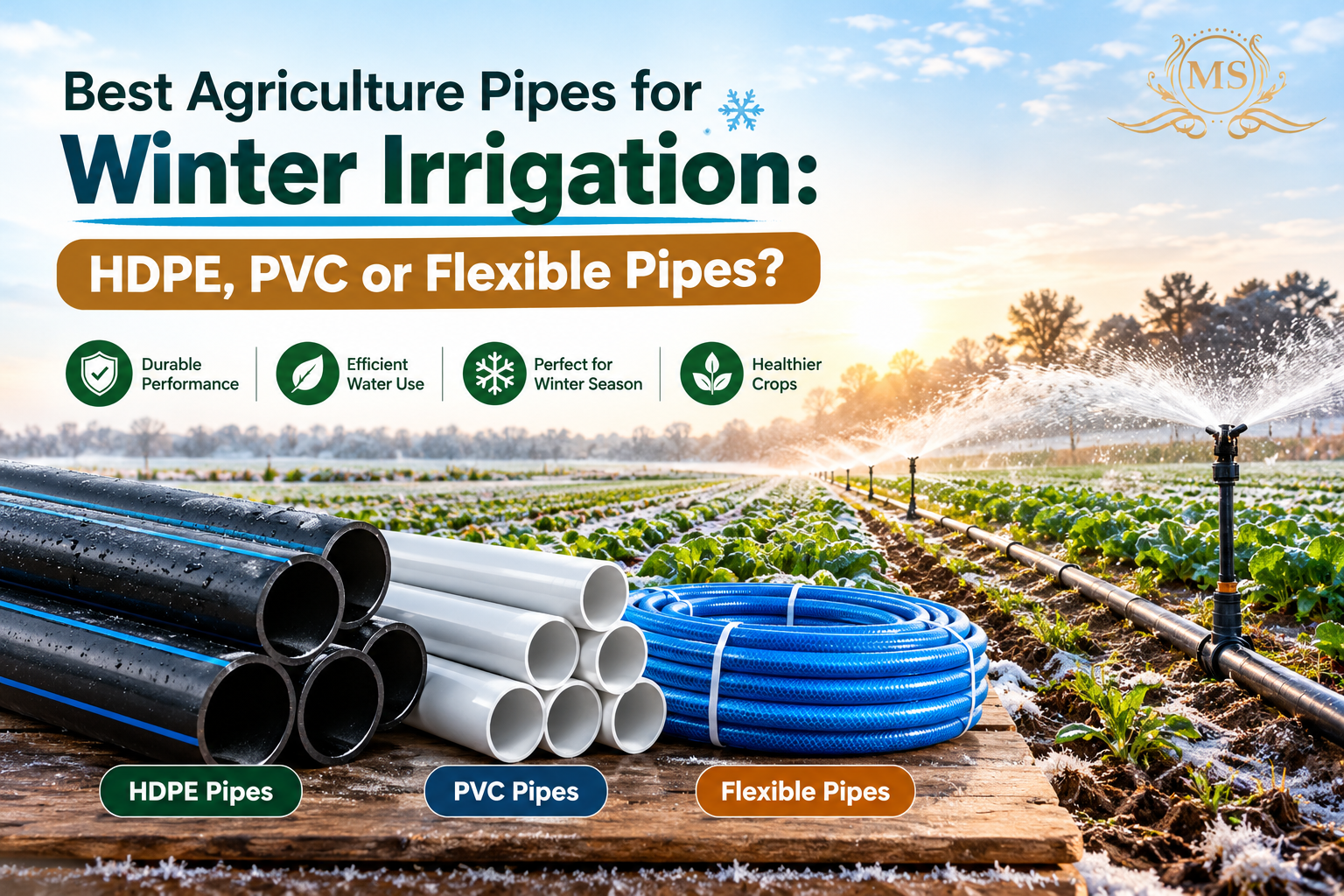
Wheat, mustard, gram and potato don’t wait. When your winter crop needs water, your pipe either gets it to the roots or loses it on the way. We supply agriculture pipes to farmers and installers every season, and one question keeps coming up: HDPE, PVC or flexible?
This irrigation pipe buying guide gives you a straight answer. We compare the three types, match them to borewell, sprinkler and drip setups, and finish with a checklist you can carry to the shop.
Why winter changes your pipe choice
Table of Contents
ToggleCold nights make some materials brittle. Long irrigation hours keep your joints under pressure for longer. Pipes left lying in the field get hit by frost at night and sun by day.
A good winter irrigation pipe stays tough in the cold, holds its pressure rating and keeps its joints tight.
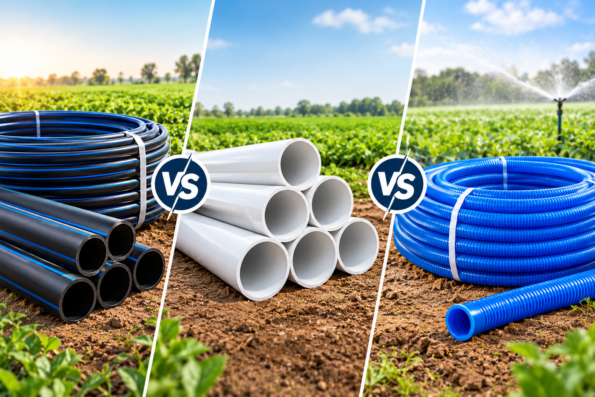
HDPE vs PVC vs flexible hose pipes
HDPE pipes come in coils or lengths. They bend around corners, stay strong in cold weather and handle higher pressure. You join them with compression fittings or welding. They suit long runs and need very little maintenance.
PVC pipes are rigid, sold in straight lengths and usually cost less. You join them with solvent cement or rubber rings. They work well for fixed lines like borewell columns and main lines. But they crack under impact, turn brittle in the cold and weaken in direct sun.
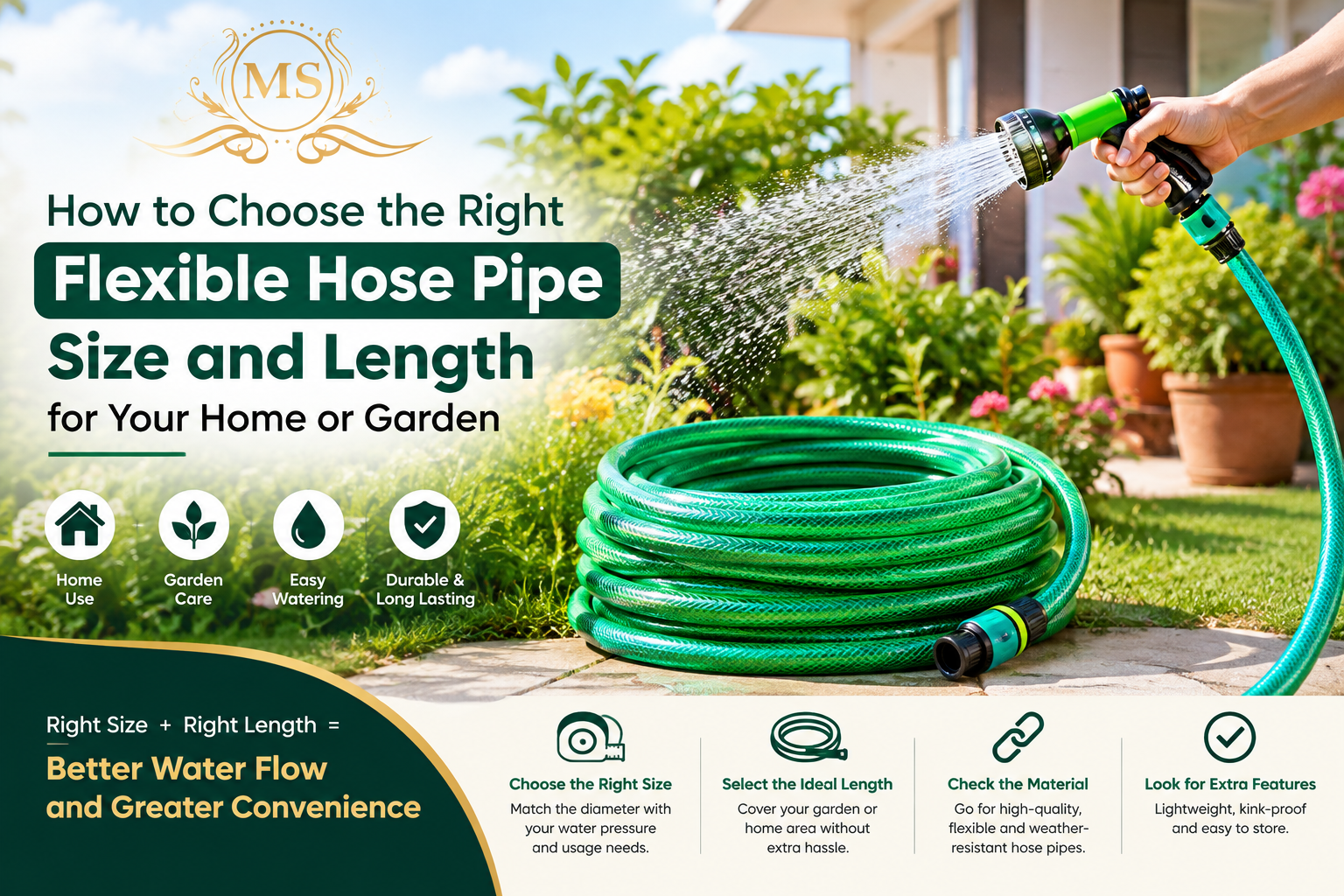
Flexible hose pipes are light and easy to roll out. You connect them with clamps or quick couplers. They’re handy for moving water from plot to plot, but they carry lower pressure and wear out faster.
Feature | HDPE | PVC | Flexible hose |
Best for | Mainlines, sprinklers, drip, long runs | Fixed lines, borewell column | Temporary, plot-to-plot use |
Flexibility | High | Low (rigid) | Very high |
Installation | Moderate, needs proper fittings | Easy to cut and join | Easiest |
Connection | Compression fittings, welding | Solvent cement, rubber ring | Clamps, quick couplers |
Pressure rating | High | Medium to high, by class | Low to medium |
Cold weather | Stays tough | Can turn brittle | Moderate |
Maintenance | Very low | Low, protect from sun and knocks | Higher, drain and store after use |
So what is the best pipe for farm irrigation? It depends on the job. Most farms use HDPE or PVC for fixed lines and flexible hose for the last stretch.
How to pick pipes for your setup
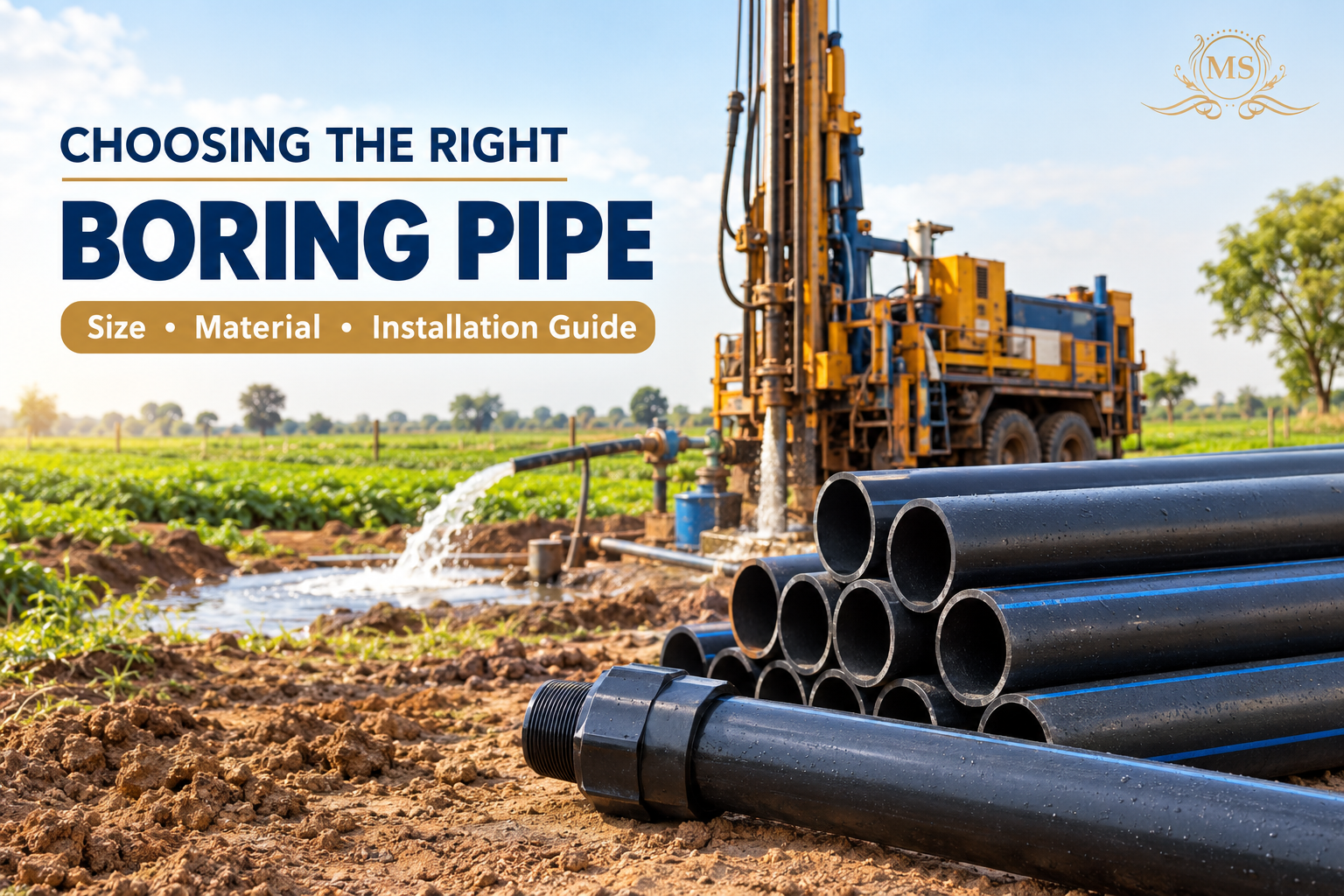
Borewell water supply: Match the pipe diameter to your pump outlet. For a long run from borewell to field, HDPE means fewer joints and fewer leaks. Choose a pressure class above your pump’s maximum.
Sprinkler irrigation: Most sprinklers set need around 2 to 3 bar at the nozzle, so check your sprinkler’s rating first. Use HDPE or PVC for the main line and flexible hose for laterals you move often.
Drip irrigation: Drip runs at low pressure. Use HDPE for the main and sub-main lines, and put a filter at the start. Size the pipe so the first and last rows get the same flow.
Agricultural irrigation pipes work best when you size the whole system together, not one section at a time.
Diameter, flow, pressure and fittings
- Diameter: Too narrow, and friction eats your pressure while the pump works harder. Too wide, and you pay for capacity you never use.
- Water flow: Add up the flow of every outlet running at the same time, then pick the size that carries it.
- Operating pressure: Pick a rating above the highest pressure your pump can produce.
- Fittings: They must match your pipe type and size. Mixing agriculture pipes and fittings from different standards is the quickest way to get leaks. Browse our HDPE pipe fittings and PVC pipe fittings, and see our flexible hose pipes for clamps and couplers.
What affects pipe prices
The prices of agriculture pipes move with a few things:
- Material: HDPE, PVC and flexible hose each cost differently.
- Diameter: Bigger pipes use more material.
- Wall thickness and pressure class: A thin wall costs less per metre but fails sooner.
- Length and packing: Full coils and bulk orders often work out cheaper per metre.
- Quality marks: ISI or BIS-certified pipes cost a little more and last longer.
- Fittings and transport: Add these to your total before you compare quotes.
- Raw material rates: Polymer prices change, so quotes change too.
Checklist: what to verify before you buy
Save this short list from our irrigation pipe buying guide before you head to the shop.
- Your pump’s outlet size and maximum pressure
- Total pipe length, plus a little extra for bends
- A pressure class higher than your working pressure
- ISI or BIS marking and batch details printed on the pipe
- UV protection if the pipe will lie in the open
- Fittings in the same size and standard as the pipe
- Even wall thickness, with no cracks, dents or flat spots
- Warranty, return terms and a written quote with GST
Ready to set up your winter irrigation?
The best pipe for farm irrigation is the one that fits your pump, your crop and your budget. We can help you work that out.
Explore our range of agricultural irrigation pipes and fittings at Mahavir Group, and tell us your borewell depth, field size and crop. We’ll suggest the right winter irrigation pipe, so your water is ready before the first frost.