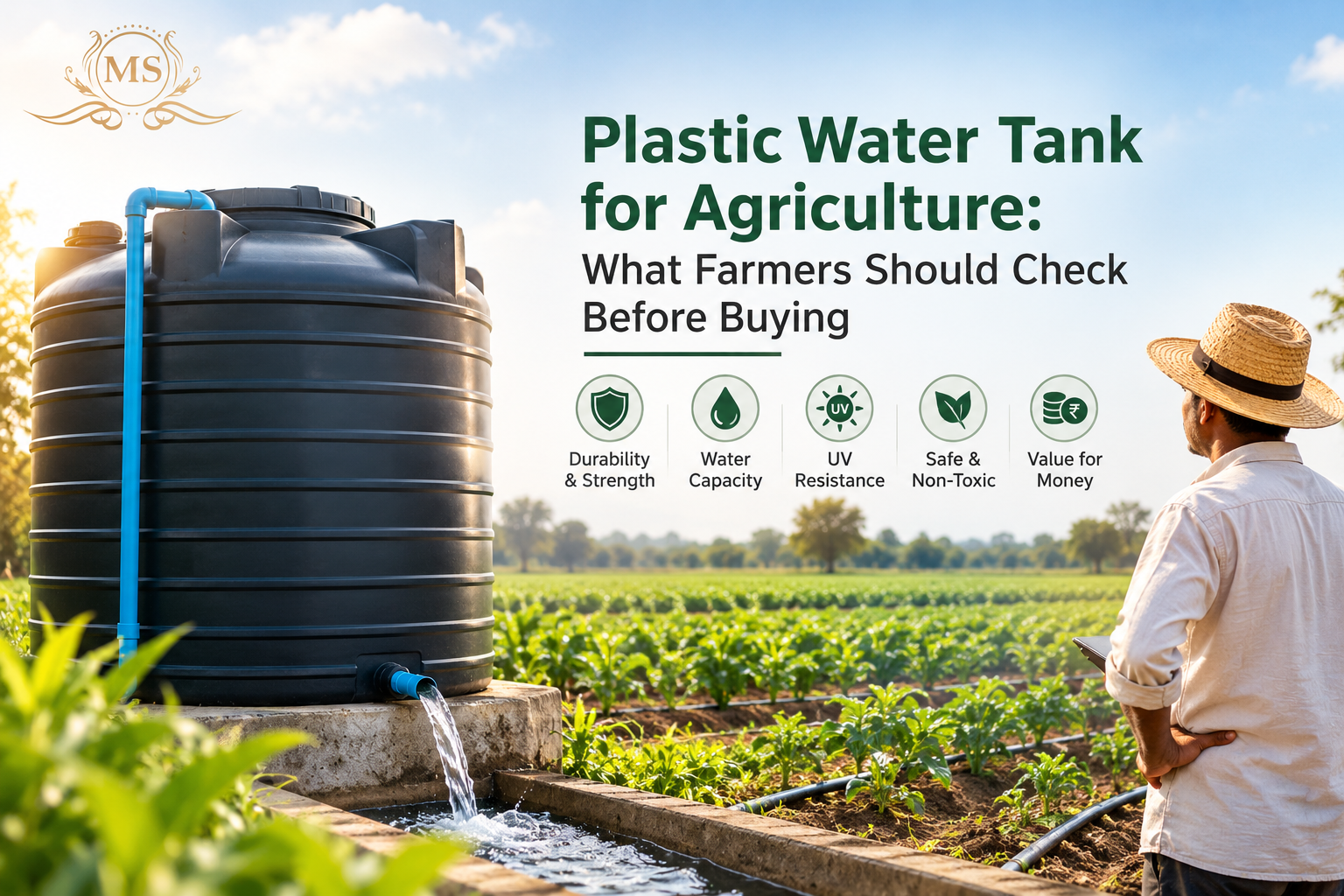
Picture your pump starting up at 5 a.m. with the drip lines waiting for water, only to find that the tank you bought last season has a crack running down one side. It happens more often than you’d think, and it usually starts with a buying decision made in ten minutes, on price alone. If you’re shopping for a plastic water tank for agriculture, give us a few minutes first. We’ll show you what to compare, what to ask and what to walk away from.
1. Start with the right capacity
Table of Contents
ToggleToo small, and you’re refilling all day. Too big, and you’ve paid for space you’ll never use. Work out your daily draw first: animals’ drinking water, hours of drip or sprinkler running, spray mixing. Then add a buffer for days when your borewell or pump runs slow.
Capacity | Typical farm use | What to consider |
500 L | Nursery, poultry shed, spray mixing | Easy to place; fills and empties fast |
750 L | Small cattle shed, kitchen garden | Good for a single point of use |
1000 L | Small drip or sprinkler block | The most common first tank for small farms |
1500 L | Dairy shed, mixed crops | Gives you a buffer if your pump is slow |
2000 L | Drip zones, farmhouse and labour quarters | Needs a firm, level base |
3000 L | Larger drip or sprinkler zones | Check space and pipe layout before ordering |
5000 L | Slow-yield borewells, bigger irrigation blocks | Full weight is about 5 tonnes, so plan the foundation |
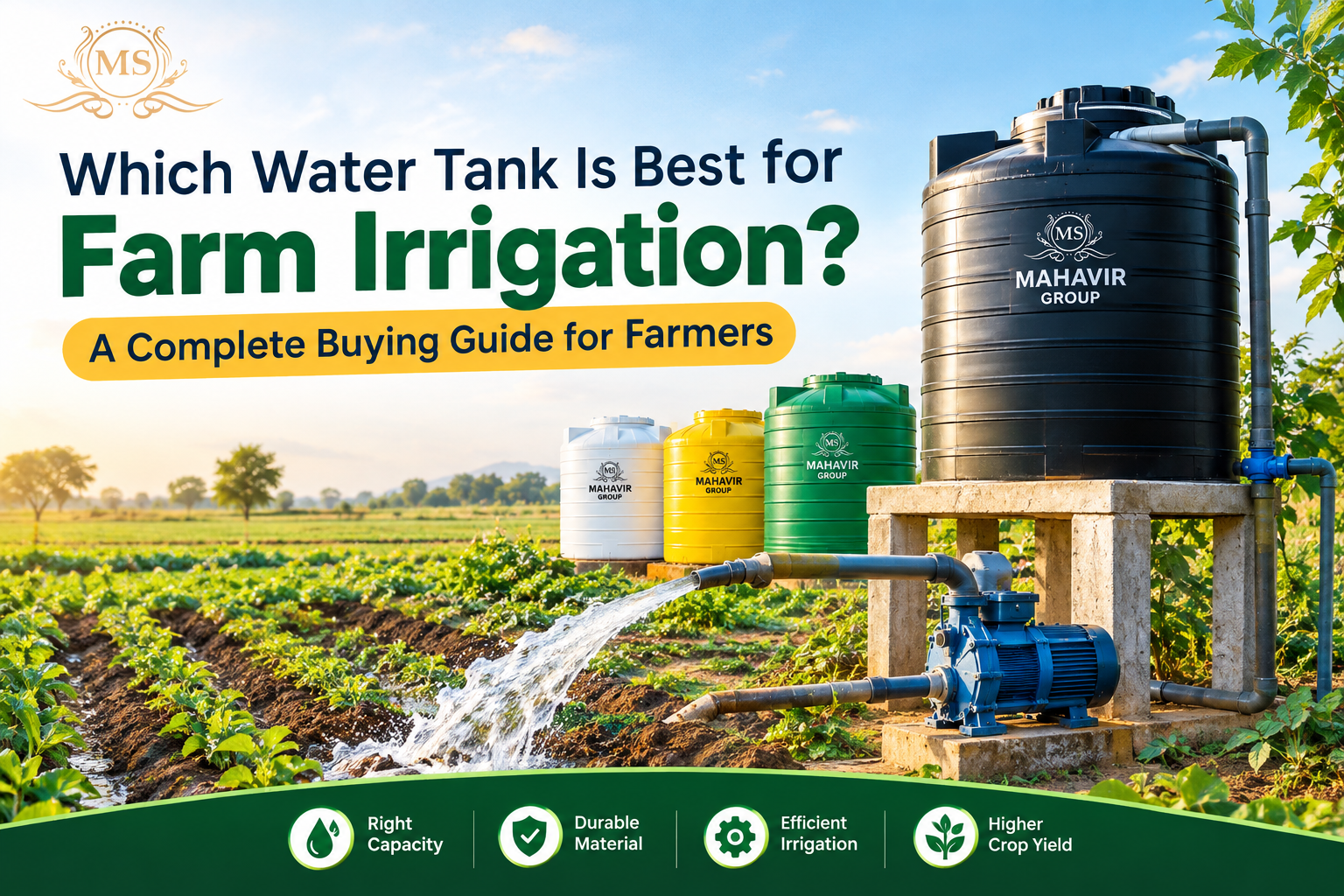
We make tanks from 500 to 5000 litres. Start on our water tanks page, or jump straight to 1000 L, 2000 L or 5000 L.
2. Look at how the tank is built
Wall thickness and construction matter more than the brand name on the lid.
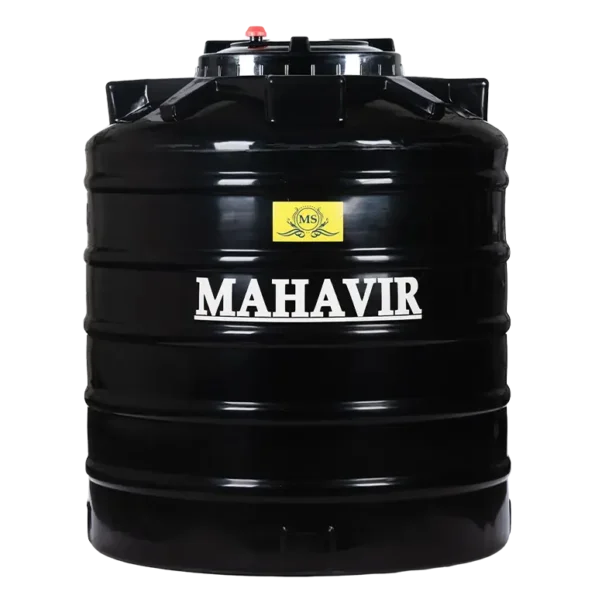
We offer 2-layer, 3-layer and 4-layer tanks, made by roto-moulding and blow-moulding. More layers usually mean better protection from light and heat, so ask your seller exactly what each layer does.
When you inspect a tank, check:
- The body is one seamless piece, with no joins or patches.
- The walls look even, especially at corners and the base.
- The lid fits snugly and sits flat.
- The tank stands without wobbling on level ground.
3. Don't skip sunlight protection
Your tank will sit in open sun for years. That’s what breaks cheap plastic: it fades, turns brittle and cracks. A UV protected water tank is made to take that exposure season after season, so a plastic water tank for farm use should always have it.
Colour matters too. Black blocks light, which helps keep algae down. Lighter colours reflect heat. We make yellow, black and white tanks, and our tanks are built to help keep your water temperature steadier.
4. Check the outlets and connections
A great tank with the wrong outlet is a headache you’ll feel every day. Before you buy:
- Match the outlet size to your pipe. Our agri pipes and PVC fittings are made to go with our tanks.
- Check the outlet height. A low outlet lets you use more of the water.
- Ask about a separate overflow and inlet.
- If you run drip lines, check how the tank connects to your drip irrigation set-up.
5. Plan the installation before the tank arrives
Water is heavy. A full 1000 L tank weighs a tonne. Give it a flat, firm base such as a concrete slab or a brick platform. If you want gravity-fed flow, raise the base. Keep the lid within easy reach for cleaning, and keep the tank clear of tractor paths.
Short on space or want to keep water cool? Look at our underground water tanks.
6. Read the warranty, not just the headline
We back our tanks with a 10-year warranty. Whoever you buy from, ask these questions and get the answers in writing:
- What exactly is covered: cracks, leaks, sun damage?
- What voids the warranty?
- Who do you call if something goes wrong?
Keep your invoice somewhere safe.
What drives the price of an agricultural water tank
Two tanks of the same size can carry very different prices. Here’s why:
- Capacity: bigger tanks use more material.
- Layers and wall thickness: more material and more layers cost more to make.
- Raw material quality: food-grade, UV-stabilised material costs more than recycled filler.
- Fittings: outlets, lids and valves.
- Colour and customisation: special sizes or fittings add cost.
- Delivery distance: a tank that travels far costs more to deliver.
So why not just pick the cheapest? Because a tank that’s a little cheaper but cracks in three seasons costs you the tank, the lost water and the replacement. Compare specifications, not just price, and don’t choose a plastic water tank for farm use on price alone. When you buy direct from a plastic water tank manufacturer, you can ask about layers, material and warranty from the people who actually make the tank.
Common mistakes we see
- Buying on price alone and skipping the specs.
- Choosing a capacity that fits today’s crop but not next year’s.
- Placing the tank on soft or uneven ground.
- Forgetting to check outlet size against existing pipes.
- Taking “UV protected” on trust with nothing in writing.
- Ignoring delivery. Our tanks reach you within 2 hours from dispatch, so ask every seller for their timeline.
Compare Mahavir Group tanks and enquire today
You’ve done the homework. Now see what’s on offer.
Browse Mahavir Group full range of water tanks, compare layers, sizes and colours, then tell us about your farm. As a plastic water tank manufacturer, we’ll help you pick the right plastic water tank for agriculture, whether it’s one tank for a borewell or several for a larger farm.