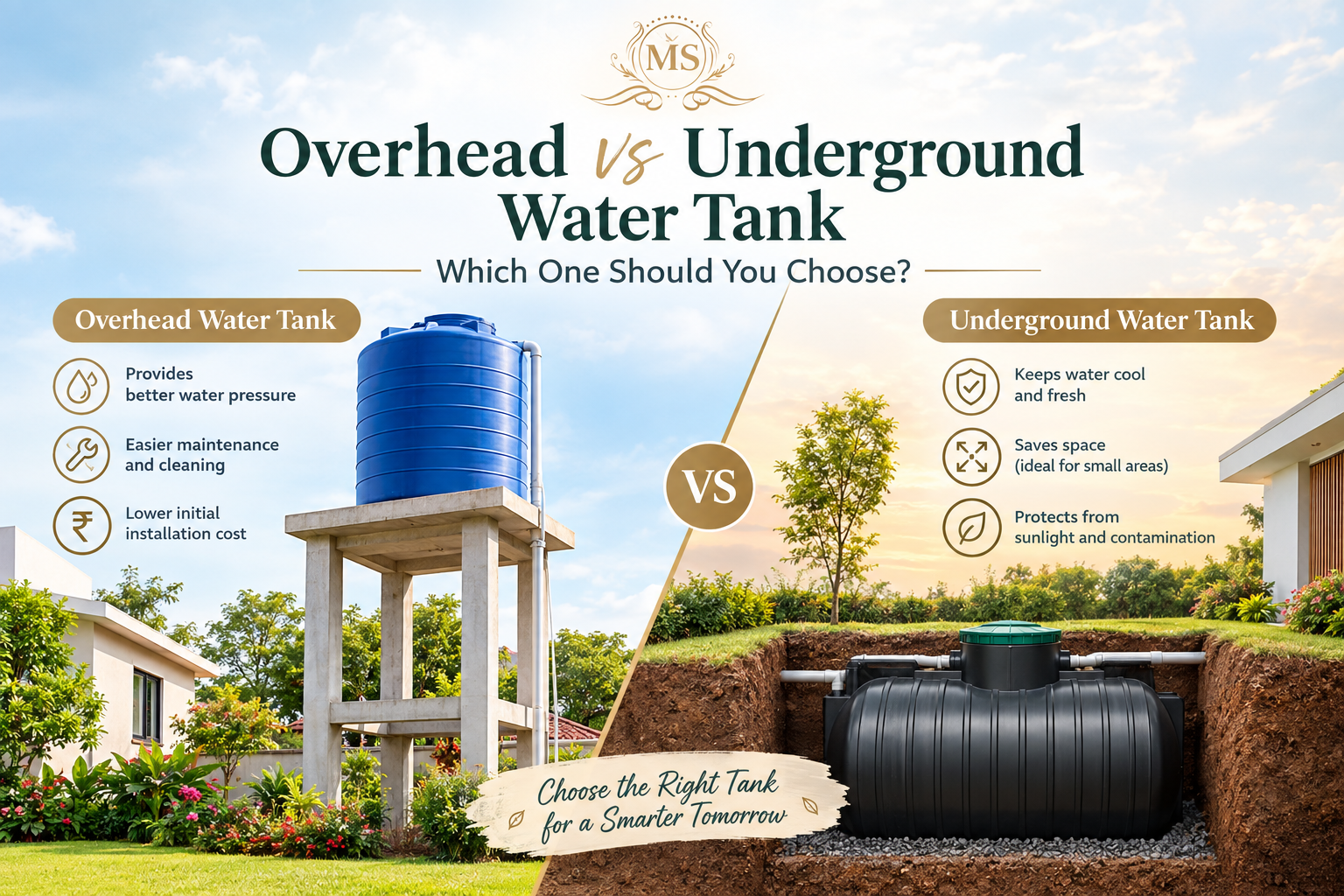
Picking between an overhead vs underground water tank comes down to a handful of practical things: how much space you have, your budget, your local weather, and how you plan to use the water. This guide walks through both options in detail. An overhead tank works on gravity, once water’s up there, it flows down, so you’re not depending on a pump every time someone turns on a tap. An underground plastic water tank works the opposite way: it sits below the surface, which frees up your roof or yard space and keeps the water noticeably cooler through the year. Neither one is perfect though, and we’ll get into where each falls short. Material matters here too, so we’ll look at plastic tanks against fiberglass and concrete, what installation actually costs, how much upkeep each type needs, and which setup tends to suit a home, a farm, or a commercial site better. By the time you finish reading, you’ll have an answer that fits your actual property instead of a generic one. Let’s start by looking at how each type actually works.
What Is an Overhead Tank?
An overhead tank sits above ground, usually on your roof, a rooftop platform, or a raised stand. Water gets pumped up into it, and from there, gravity does the rest of the work, pushing water down through your pipes whenever you open a tap. That’s why most Indian homes and apartment buildings still rely on this setup. No power cut? No problem. You still get water flowing as long as the tank has some left in it.
The downside is visibility. An overhead tank sits in direct sunlight most of the day, which speeds up algae growth and heats the water more than you’d like, especially through Indian summers. It also takes up roof space you might want for other things, like solar panels or a terrace garden.
What Is an Underground Plastic Water Tank?
An underground plastic water tank sits below the surface, usually buried in your yard, courtyard, or under a driveway. You need a pump to draw water up and move it through the house, but in exchange, you get a few real advantages. The tank stays shielded from direct sunlight, so the water stays cooler and algae has a harder time forming. Buried tanks are also less exposed to weather extremes, mechanical damage, or vandalism.
Space is the other big win here. If your plot is small or every square foot on the roof matters, putting your storage underground frees that space up for something else. Farmers dealing with tight land use often prefer this setup for exactly that reason.
Overhead vs Underground Water Tank: Key Differences
Here’s how the two stack up against each other on the things that actually affect your daily life:
| Factor | Overhead Tank | Underground Plastic Water Tank |
|---|---|---|
| Water pressure | Naturally strong, gravity-fed | Needs a pump to push water up |
| Sun and heat exposure | High, water warms up faster | Minimal, water stays cooler |
| Algae and bacteria risk | Higher due to sunlight exposure | Lower, tank stays dark and cool |
| Space required | Roof or elevated stand | Below ground, saves surface area |
| Power dependency | Works without power once filled | Needs power to pump water out |
| Visual and structural load | Adds weight to roof structure | No load on the building itself |
Plastic Water Storage Tanks: Material Matters
Whichever type you go with, the material makes a real difference in how long the tank lasts. Plastic water storage tanks, especially food-grade, UV-stabilized polyethylene, hold up well against India’s weather swings without rusting or cracking the way older concrete or metal tanks tend to over time. They’re also lighter, which matters a lot for overhead installations where roof load is a concern.
You’ll also come across fiberglass tanks, mostly on bigger commercial jobs. It resists corrosion and holds up well structurally, no argument there, but it costs more and can be hard to track down outside major cities. For most homes and farms, a solid plastic tank does the job just as well, minus the extra expense.
Which One Should You Choose?
There’s no single right answer here. It really depends on your situation.
Go With an Overhead Tank If:
- Power cuts are common where you live and you don’t want to lose water access when they hit
- Your roof has room to spare and the structure can take the added weight
- You’d rather get quick pressure than run a pump every time someone opens a tap
- Cleaning it out every few months to keep algae in check doesn’t bother you
Go With an Underground Plastic Water Tank If:
- Surface space genuinely matters to you, which is common on smaller plots and working farms
- You’re building from scratch and can plan the digging and pump setup properly from day one
- Cooler, cleaner water sitting out of direct sun is worth more to you than a simpler above-ground install
- You want something that can take a beating from weather and physical damage and still hold up years later
Cost and Maintenance Comparison
Overhead tanks cost less to put in since there’s no digging involved, but expect to clean them more often thanks to all that sun exposure. Underground tanks ask for more money upfront, mostly for excavation and the pump, but the sealed, buried setup means less frequent cleaning and usually a longer working life.
Stretch that out over ten years and the numbers tend to land close to each other. What you save on installation with an overhead tank, you often spend back on maintenance down the line.