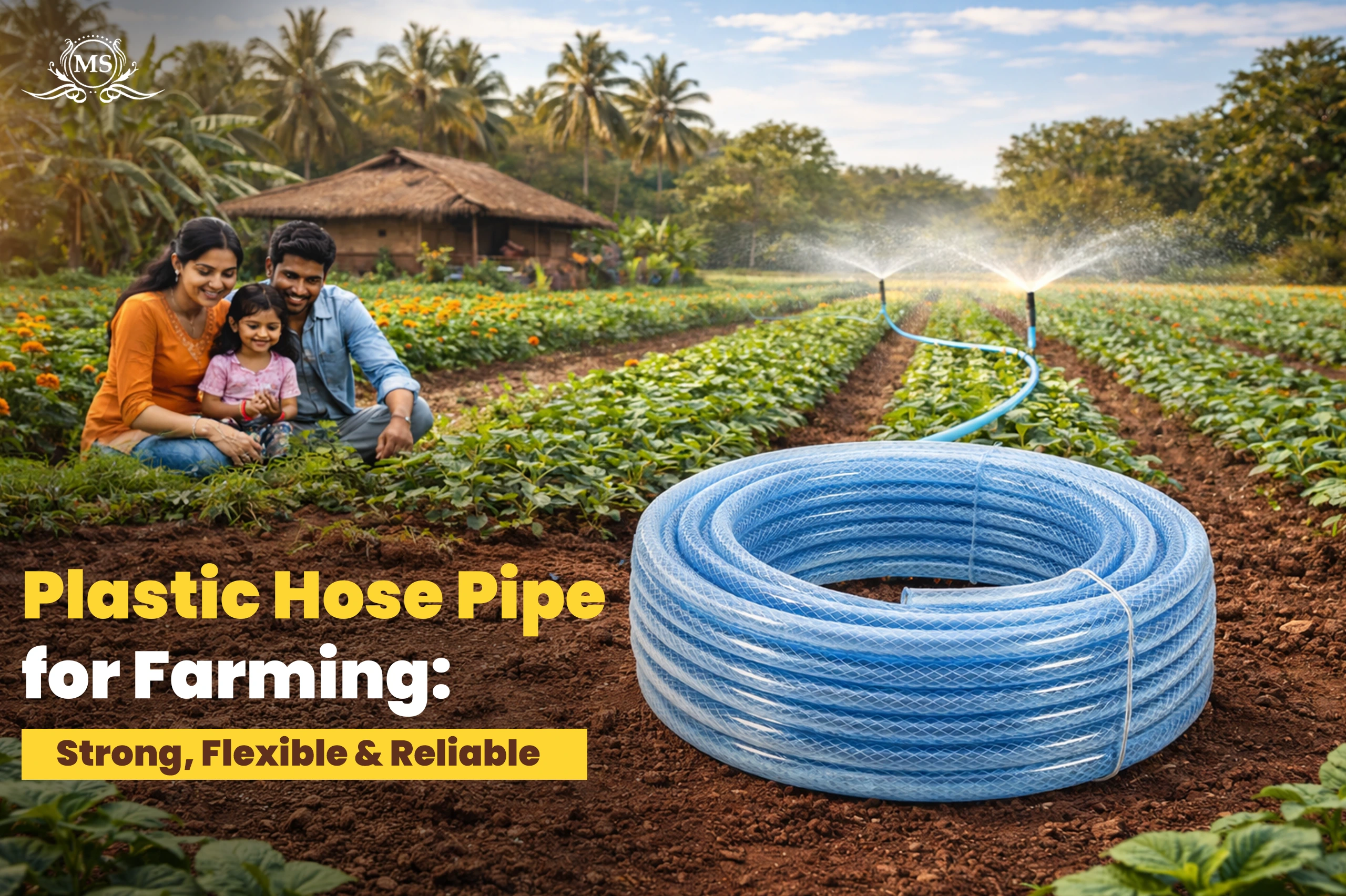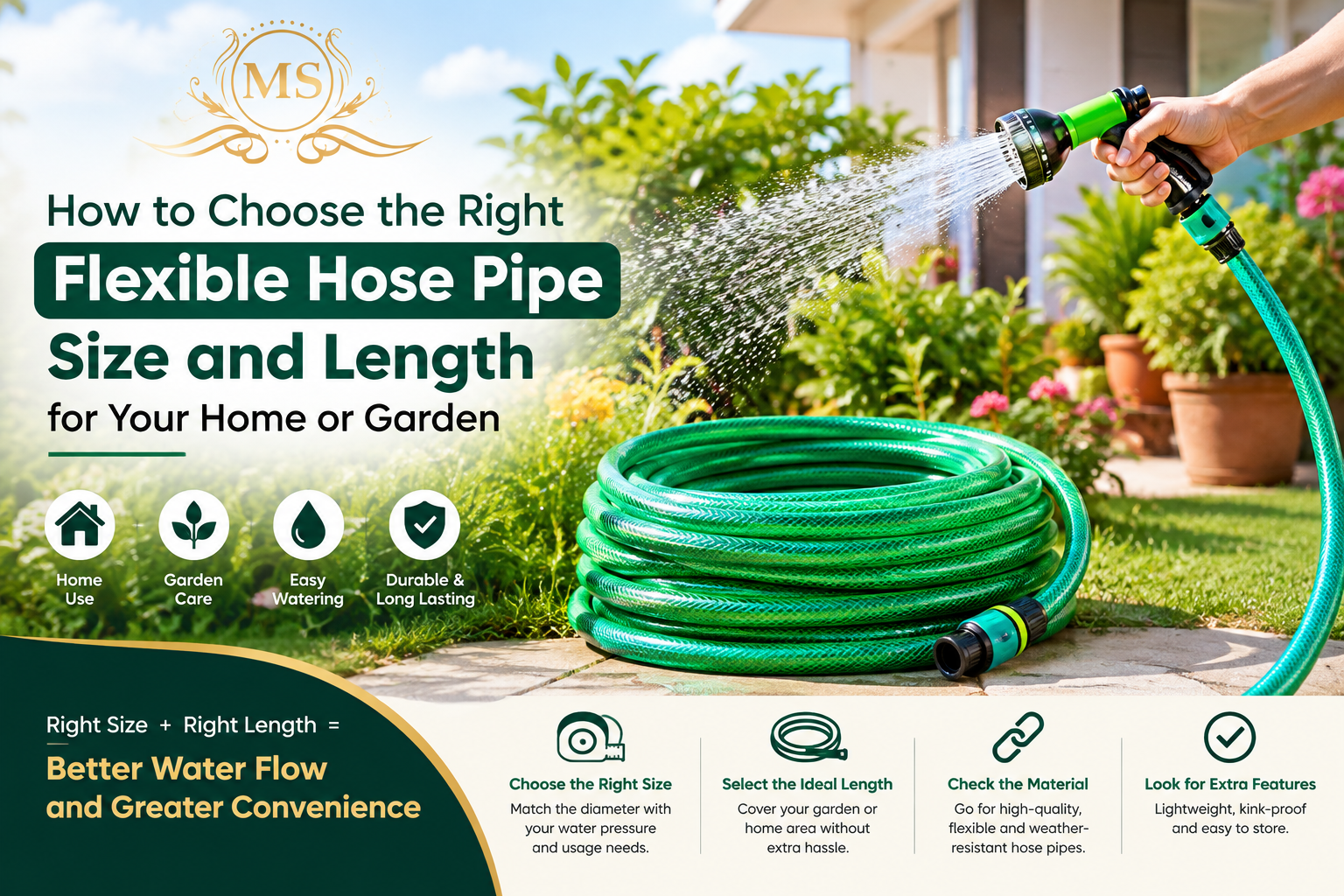
Picking a hose sounds simple until you’re standing in a shop staring at ten identical coils, wondering why one costs three times more than another. Here’s the short version. Diameter controls water flow, length controls reach, and material decides whether the pipe survives an Indian summer or turns brittle after one season. A half-inch flexible hose pipe suits most balconies and small lawns, while three-quarter inch pipes handle bigger gardens or fast tank filling. Length should match your actual watering radius, not “buy the longest one available,” since longer hoses lose pressure and get heavier to drag around. A reinforced, UV-resistant hose outlasts a cheap unbranded one within a single monsoon, and checking a flexible garden pipe online beforehand lets you match diameter and fittings to your tap before it arrives at your door. That’s the summary. Here’s why each choice matters, and how to get it right the first time.
Why Hose Pipe Size Actually Matters
Most people grab whatever’s on the shelf and assume a hose is a hose. It isn’t. The internal diameter decides how much water moves through per minute, and that changes everything downstream.
A narrow pipe restricts flow. Attach it to a strong tap and you’ll still get a weak trickle at the nozzle end, especially over longer runs. A wider pipe carries more water but weighs more when full and costs more per metre. There’s no single right answer, it depends on your tap output and what you’re actually using it for.
Rough guide by diameter:
- 1/2 inch (12mm): Balconies, potted plants, washing a scooter or bike
- 5/8 inch (16mm): Standard home gardens, mid-size lawns, general cleaning
- 3/4 inch (19mm): Larger lawns, car washing, filling tanks or drums fast
- 1 inch (25mm): Farm plots, heavy-duty agricultural watering
If your tap already struggles with low pressure, going wider can make things worse. A narrower pipe sometimes helps maintain velocity in low-pressure setups. More isn’t automatically better.
Matching Garden Hose Pipe Length to Your Space
Length trips people up more than diameter does. The instinct is to buy the longest hose available so you “never run short.” Then it arrives, and you spend the next two years wrestling twenty extra metres every time you water one flower bed near the tap.
Measure first. Walk from your outdoor tap to the farthest point you’ll realistically water, then add two or three metres for slack around corners. That’s your number, no rounding up “just in case.”
Space Type | Recommended Length |
Balcony or small terrace | 5 to 10 metres |
Standard home garden | 15 to 20 metres |
Large lawn or farmhouse plot | 25 to 30 metres |
Commercial or agricultural use | 30 metres or more, often joined sections |
Longer runs mean more pressure drop by the time water reaches the nozzle. If you genuinely need forty or fifty metres, it’s often smarter to join two shorter, wider hoses with a coupling than to run one long, thin one. Better flow, easier storage.
What Makes a Flexible Hose Pipe Last
Size gets the attention, but build quality decides whether you’re buying a hose once or every season. A cheap PVC pipe left out in Indian heat cracks and starts leaking at the joints within months. That’s just what unreinforced plastic does under UV exposure and temperature swings.
Check for these before buying:
- Multi-layer construction. A braided or mesh-reinforced core resists kinking and bursting far better than a single-layer tube.
- UV stabilised material. Pipes left in direct sun need built-in UV protection, or they turn brittle within a season.
- Flexibility in heat. Some pipes stiffen badly as temperatures climb. Good ones stay pliable when you unroll them.
- Solid brass or ISI-marked fittings. Cheap plastic connectors usually fail before the pipe itself does.
A well-built hose should coil without kinking, sit flat when unrolled, and survive being stepped on occasionally, because it will be.
Choosing Diameter and Length Together
These two decisions work as a pair, not separately. A long, narrow hose fights itself, length wants pressure to travel further while a narrow diameter is already limiting how much water is moving. Pair a longer run with a slightly wider diameter to keep flow usable at the far end.
For a typical urban Indian home, a 5/8 inch pipe at 15 to 20 metres covers most needs, terrace plants, a small lawn, washing the car, general outdoor cleaning. Bigger plots do better with 3/4 inch or 1 inch pipes, especially when filling tanks or running sprinklers where flow rate matters more than reach.
If you’re unsure, list what you’ll actually use it for first. Watering only? Go narrower and save on weight. Washing vehicles or filling containers fast? Go wider. Covering a large plot from one tap? Prioritise length, but compensate with diameter so pressure doesn’t collapse halfway down.
Buying a Flexible Garden Pipe Online Without Guessing Wrong
Shopping in person means you can at least feel the material first. Buying online removes that, so you’re relying entirely on the listed specs being accurate. Check three things before adding to cart: internal diameter, total length, and whether fittings are included or sold separately.
Also confirm the fitting size matches your existing tap threading. Indian taps commonly use 1/2 inch or 3/4 inch standard threads, and a mismatched connector means buying an adapter afterward, which nobody enjoys doing twice in one week.
Getting hose pipe size and length right isn’t complicated once you know what to check, diameter for flow, length for reach, build quality for how long it survives outside. Mahavir Group manufactures a range of durable, reinforced garden hose pipe options built for Indian weather and everyday household use, so whether you’re watering a balcony or running water across a farmhouse plot, there’s a size that fits without paying for length you’ll never use.