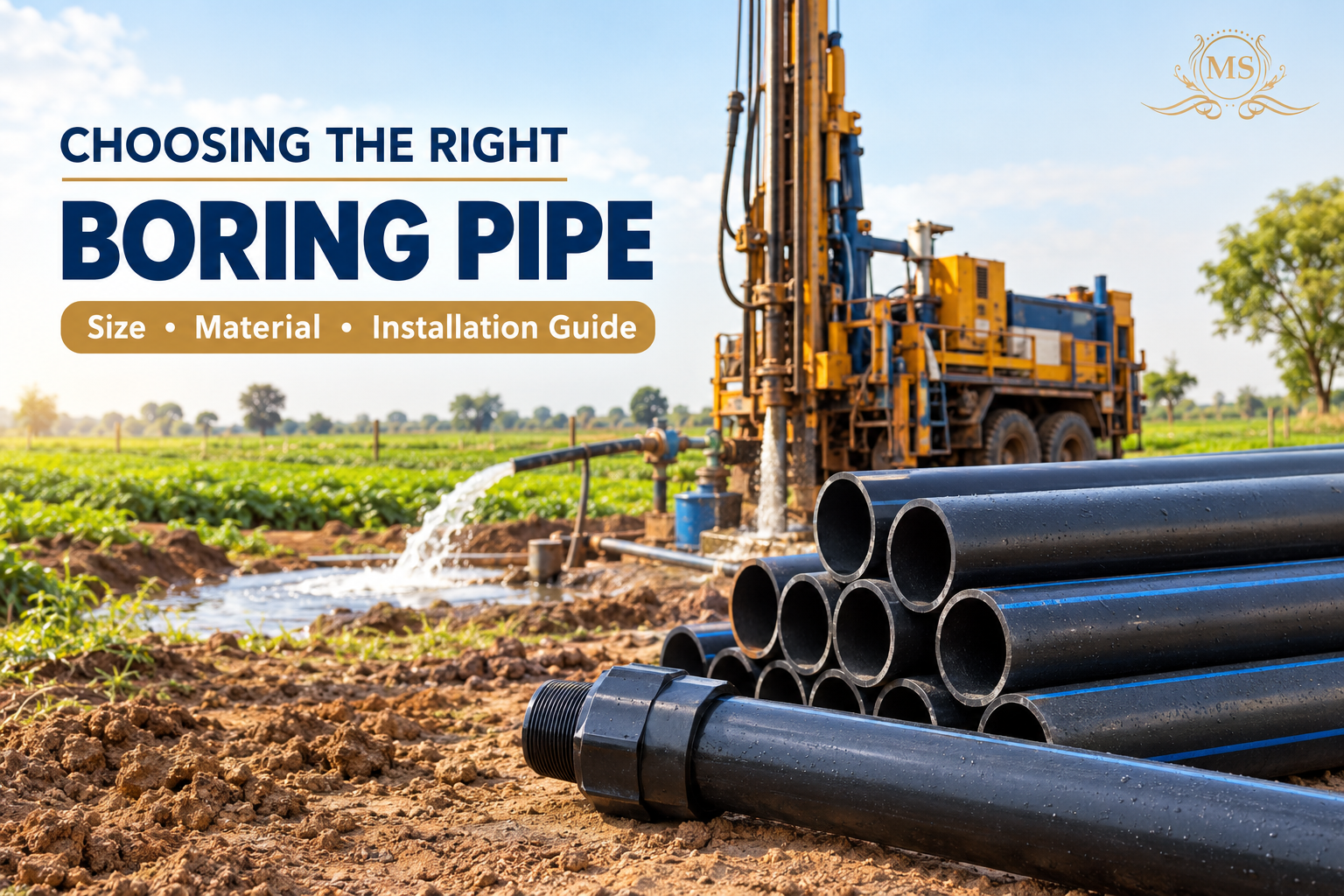
You’ve paid for the drilling, the rig has left, and the water is finally coming up. Then a season later the borewell starts pulling sand, or the wall caves in. In most cases, the pipe is the reason.
Choosing the right boring pipe for borewell work isn’t complicated once you know what to check: depth, diameter, material and soil. We’ve been supplying pipes to farmers, drillers and builders for over 21 years, and this guide covers what we tell our customers every day. You’ll also find a comparison table and a checklist you can take straight to your dealer.
Boring Pipe vs Casing Pipe: What's the Difference?
People use the two names loosely, and that’s where mix-ups start. Here’s the simple version:
- Casing pipe lines the borehole wall. It holds the soil back, keeps surface water and dirt out, and gives your pump a clear path.
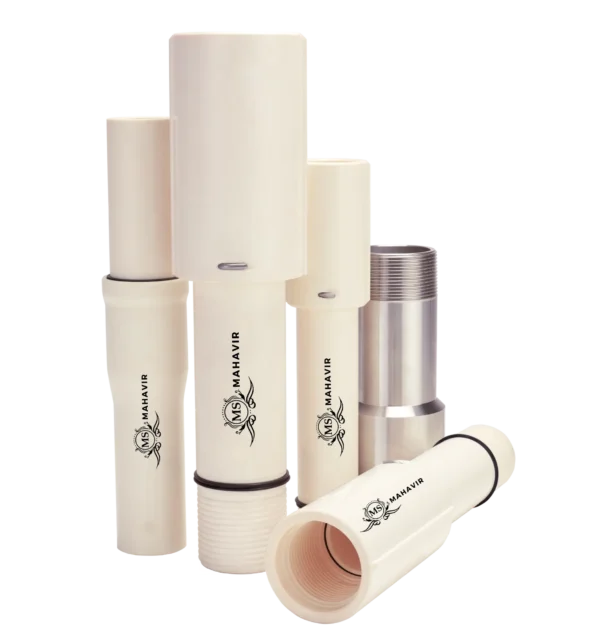
- Boring pipe is the pipe lowered into the hole during and after drilling. Part of it is often slotted, so water flows in but sand stays out.
Many borewells use both. Plain pipe runs through the loose upper soil, and slotted pipe sits where the water is. If you’re not sure which one you need, tell us your depth and soil type and we’ll point you in the right direction. You can browse our boring pipe range and our casing pipe range side by side.
Borewell Pipe Selection: Four Things to Check
Good borewell pipe selection starts with four facts about your site. Get these right and the rest gets easy.
1. Start with your borewell depth
Depth decides how much weight and pressure your pipe has to handle.
- Shallow (up to about 100 ft): Standard-wall pipe usually does the job.
- Medium (about 100 to 300 ft): Go for a thicker wall and check the joints carefully.
- Deep (300 ft and beyond): You need heavy-duty pipe with strong joints. The lower joints carry the most weight, so thin pipe is a false saving here. Talk to your driller first.
These bands are a rough guide. Your driller’s log, which shows what the ground looks like at each level, matters more than any number we can give you.
2. Match the diameter to your pump
The pipe’s inside diameter must be wider than your pump, with room to spare. A tight fit makes the pump hard to lower, harder to pull out later, and can damage both.
- 4-inch: Small homes, light domestic use.
- 5 to 6-inch: The most common choice for farm submersible pumps.
- 7-inch and above: Larger pumps, big irrigation setups and commercial use.
Check your pump’s datasheet for the borewell size it needs before you order. It takes two minutes and saves a costly mistake.
3. Read your soil
Sandy or loose soil needs a slotted section and a gravel pack around the pipe. Clay and rocky ground are steadier, but the weathered layer near the surface still needs proper casing. If your area has a history of collapsing borewells, mention it when you enquire.
4. Pick the right material
Here’s how the common options compare for a boring pipe for borewell use:
Material | Best for | What you get | Keep in mind |
uPVC | Shallow to medium borewells on farms and homes | Rust-proof, light, easy to handle, budget-friendly | Handle gently; not the best pick for very deep or unstable ground |
HDPE | Uneven ground, shifting soil, long runs | Flexible, impact-resistant, tight fused joints | Needs the right jointing equipment and wall thickness |
Mild steel | Very deep or heavily loaded borewells | Highest strength | Heavy, costs more, rusts over time |
We supply PVC and HDPE pipes. For steel, ask your driller. If you’re irrigating, our agri pipes are worth a look too.
What Affects Boring Pipe Price?
Cost is the first thing most buyers ask about, and it’s a fair question. Here’s what moves the number:
- Material: HDPE and steel usually cost more than uPVC.
- Diameter: Wider pipe uses more material.
- Wall thickness: Thicker walls cost more but handle deeper bores.
- Length: The total metres you need, plus any extra for the cap and joints.
- Slotting: Slotted sections are made to order.
- Quality marks: Pipes made to proper standards cost a little more upfront.
- Transport: Distance to your site and the weight of the load.
As a rough guide, a 4-inch pipe is listed at around ₹60 to ₹100 per metre on our boring pipe page. The final figure depends on the points above, so contact us for a quote based on your exact specification
Five Buying Mistakes We See Often
- Choosing on boring pipe price alone: A cheap, thin-walled pipe that cracks in two years costs far more than a sturdier one bought once.
- Ignoring pump size: The pipe fits the hole but not the pump.
- Using plain pipe in a water zone: Without slots, water can’t enter freely.
- Skipping the soil report: A pipe that suits clay can fail in sand.
- Buying too little: Running short on metres mid-installation stops the whole job.
Boring Pipe Installation: What to Get Right
Even the best pipe fails if it goes in badly. Whether you do it yourself or hire a crew, keep these points in mind:
- Store pipes flat, in the shade: Long sun exposure weakens plastic.
- Lower the pipe straight and slowly: Never drop or drag it.
- Lay the lengths out in order first: Marking them on the ground tells you exactly which piece goes down at which depth.
- Line up the slotted section with the water-bearing layer: Your driller’s log shows where it is.
- Fill the gap with clean gravel: This holds the soil back while letting water through.
- Seal the top: A cement or clay seal around the pipe head stops surface runoff from reaching your water.
- Cap the borewell: It keeps out debris, insects and children.
- Check every joint before lowering: Threaded or solvent-welded joints should be clean, dry and fully seated.
You’ll also need the right fittings. Our PVC fittings and HDPE fittings are made to match our pipes, so everything fits the first time.
Pre-Purchase Checklist
Take this list with you when you call a dealer:
- I know my borewell’s total depth, or my driller’s estimate.
- I’ve checked the pump size and the borewell diameter it needs.
- I know my soil type and whether it tends to collapse.
- I’ve chosen a material that suits the depth and ground.
- I know how many metres of plain and slotted pipe I need.
- I’ve asked about wall thickness and quality certification.
- I’ve asked for a written quote that includes fittings and delivery.
- I’ve confirmed who will handle the installation.
Get the Right Pipe the First Time
Choosing the right boring pipe for borewell applications doesn’t have to be a guessing game. At Mahavir Group, we help you find a suitable pipe based on your borewell depth, diameter and soil conditions. Share your project details with our team to get guidance on pipe material, size and quantity, along with a price quote and assistance with boring pipe installation queries.